Thirteen years ago, Karen had a car accident and was told she had whiplash. The same year, she had a metal crown fitted.
Guess which one got the blame.
Thirteen Years of Back Pain After a Car Accident
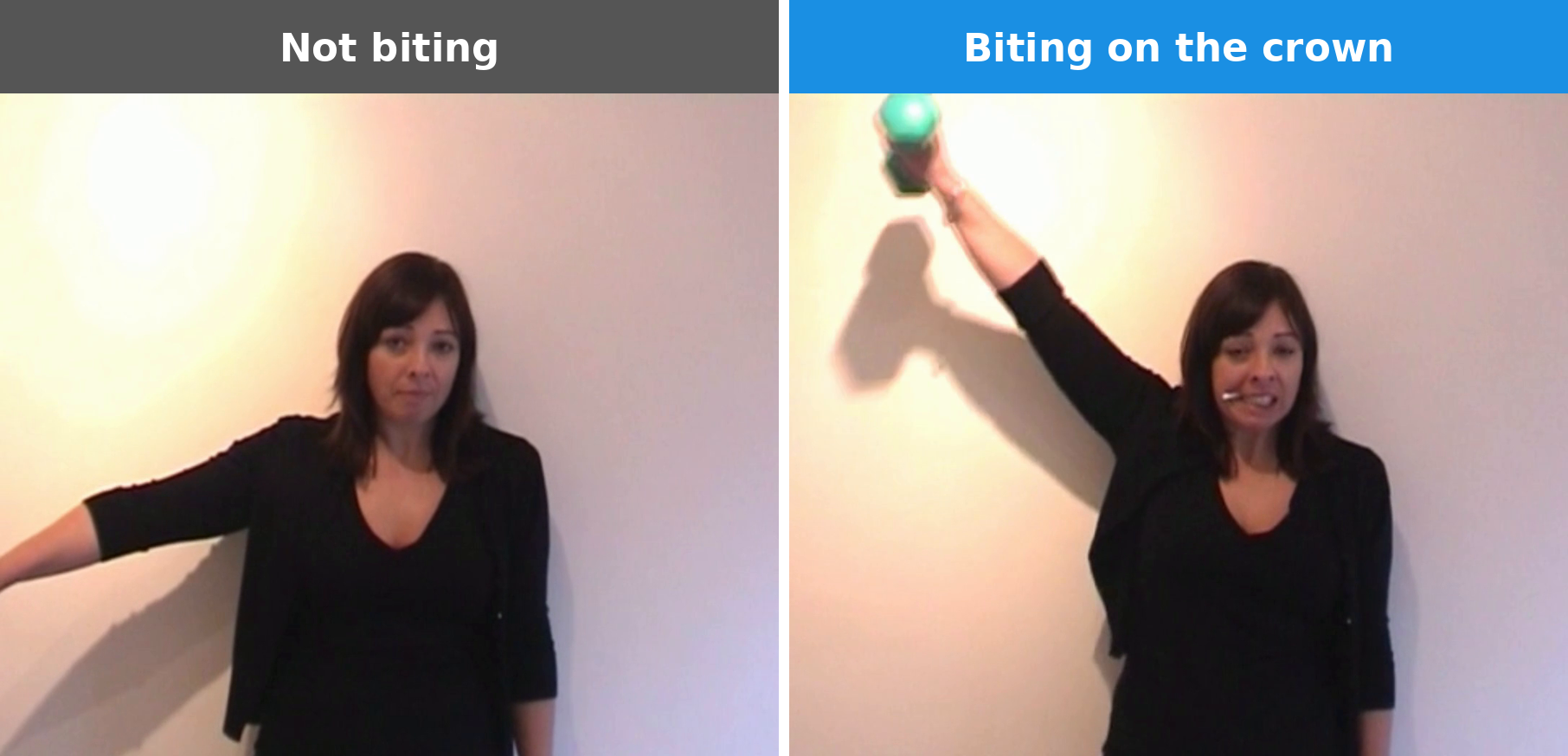
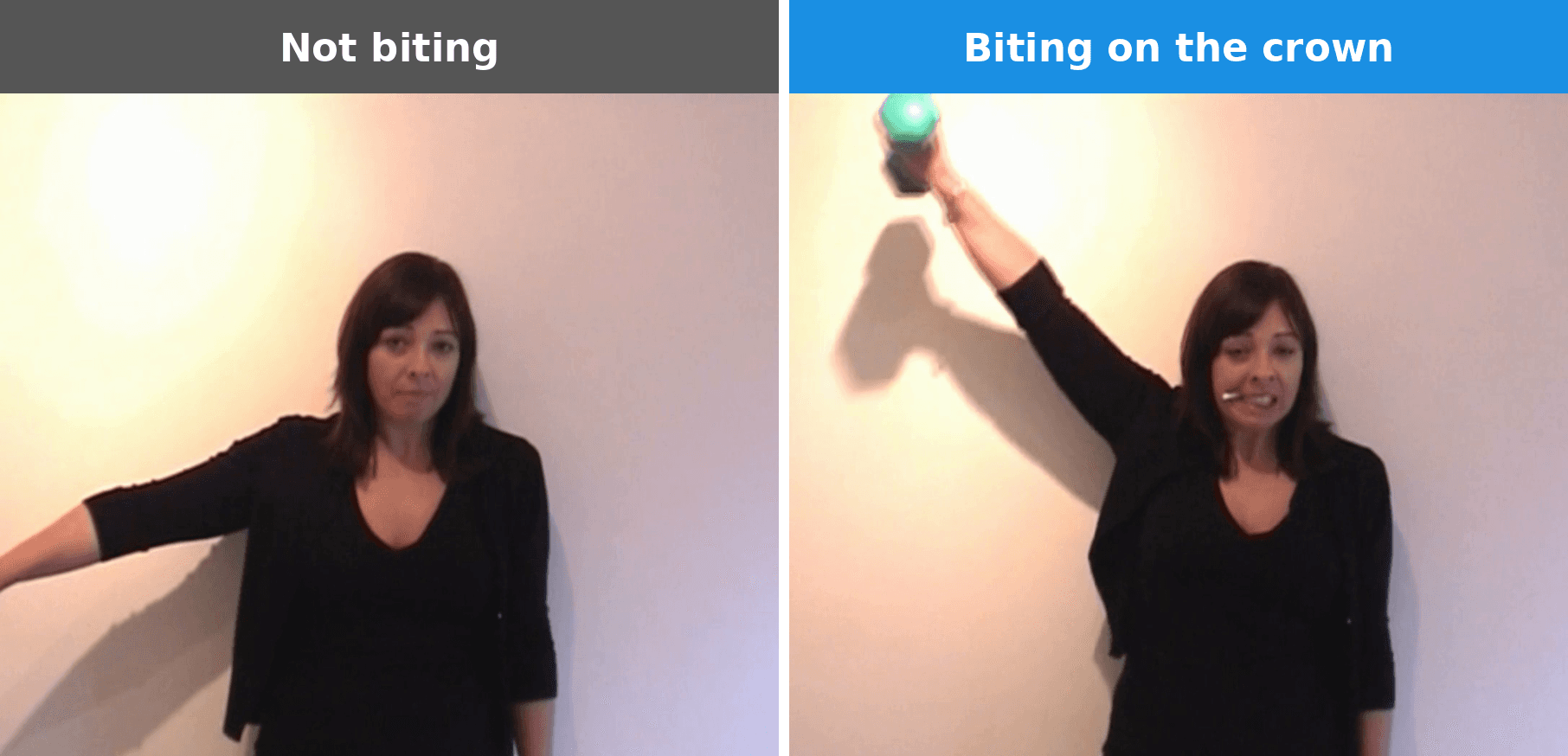
Same arm, same weight, a few seconds apart. The only change is a cotton roll between her teeth, over the crown.
After the accident, Karen's back went from bad to worse. Then she fell down the stairs and slipped two discs.
The pain was worse on her right side, with pins and needles running down it. She couldn't sleep. She used to teach aerobics. She couldn't even dance any more.
She spent thousands of pounds trying to fix it. In her words, "I just wanted to find something that worked!"
Everyone assumed the accident was the cause. It's the obvious suspect. A big event, a lot of force, and the pain started around then.
But obvious isn't the same as proven.
Taking an MRI scan is like taking a photograph of a road accident. In Karen's case, that's almost literally true. A scan shows you what's damaged. It doesn't tell you what's stopping the body from recovering.
And here's a question nobody asked. Why does a fall down the stairs slip two discs in one person, when another walks away bruised? Strong muscles protect the spine when you fall. Turned-down muscles don't.
Karen's chiropractor wondered whether her crown might be involved and sent her to me. Her husband came too. His first reaction, she told me later, was "what have you been told now!"
Fair enough. I'd have been sceptical too.
The Bite Test: Measuring Strength With and Without the Crown
So we tested her.
Karen stood against a wall holding a light dumbbell and lifted it out to the side, first with her left arm, then with her right.
The left arm was fine. The right got to shoulder height and stopped. It just wouldn't go any further.
Then I put a cotton roll between her teeth, over the metal crown, and asked her to bite down gently and try again.
Her right arm went straight up, past shoulder height and right over her head. Smooth and easy.
Cotton roll out. Shoulder height, and stuck. Cotton roll back in. Overhead again. Out again. Stuck again.
Five attempts, alternating, and the pattern never changed. I didn't touch her arm or the weight at any point. She was her own control.

Five attempts in a row. Her right arm only gets above shoulder height while she's biting on the crown.
We also had her bite on other teeth, as a control. If biting in general made her stronger, any tooth would do. It doesn't work that way. It's the involved tooth that matters.
Why a Tooth Can Weaken Your Whole Side
Your teeth don't sit in solid bone. Each one hangs in a tiny sling of ligament, and that ligament is packed with sensors.
Those sensors are extraordinarily sensitive. They can tell you there's a grain of sand in your salad before you've finished the first bite. They report how hard you're biting, in which direction, and whether the pressure is steady or sudden.
Professor Kemal Türker and his colleagues showed back in 1994 that these sensors have a direct effect on the muscles. Slow, steady pressure on a tooth increases the activity of the jaw-closing muscles. A sharp tap does the opposite and turns them down.
Anyone who has bitten on a stone in their food knows that second response. Your jaw drops open before you've even thought about it. That's a withdrawal reflex, and it doesn't stop at the jaw. You flinch all over.
A bad signal from a tooth is a nail in the foot that you can't see. The body protects itself the only way it knows how, by turning down the muscles. The trouble starts when the nail never comes out.
Here's the part most people miss. Signals from your teeth don't enter the spinal cord at all. They go straight into the brainstem, which sets the background tone of the muscles across whole regions of the body at once.
That's why, in my experience, weakness that follows a single spinal segment usually comes from the spine. Weakness down one whole side, or a whole limb, very often comes from the mouth.
Karen's pain and pins and needles were down her right side. Her weak arm was on the same side. Her left arm was normal. The pattern fits.
Why Biting on the Crown Restores Strength
You might expect that pressing on a problem tooth would make things worse. With Karen, it did the opposite.
The best explanation I have is this. A faulty crown sends an abnormal, irregular signal. Firm, steady pressure gives those sensors a clear, consistent signal instead, and the protective reflex stands down for as long as the pressure lasts.
Clinically, that's useful. It means we don't have to guess which tooth is involved. We can ask the nervous system directly, and it answers in seconds.
What Happened When the Crown Came Out
Karen had the metal crown removed and replaced with a non-metal one.
I'll let her tell you the rest:
"My back has improved ten-fold, instantly my strength came back… I'm no longer on tablets every day and I'm not crying every day."
Thirteen years, thousands of pounds, and the answer was a tooth that nobody had thought to test.
Hardware or Software?
The car accident may well have damaged something. I'm not dismissing it.
But Karen's muscles weren't torn, and her arm wasn't broken. Her hardware could lift that weight overhead. We watched it do so, twice, within seconds of failing.
What was holding her back was the software. A protective reflex, triggered by an input she'd never have suspected, quietly turning her muscles down for thirteen years.
If you only ever look at the accident, you'll never find the crown.
And if your pain has lasted for years, and it runs down one whole side, it might be worth asking what else happened around the time it started.
Find out how Protective Reflex Testing (PRT) works at afferentology.org
To your strength!