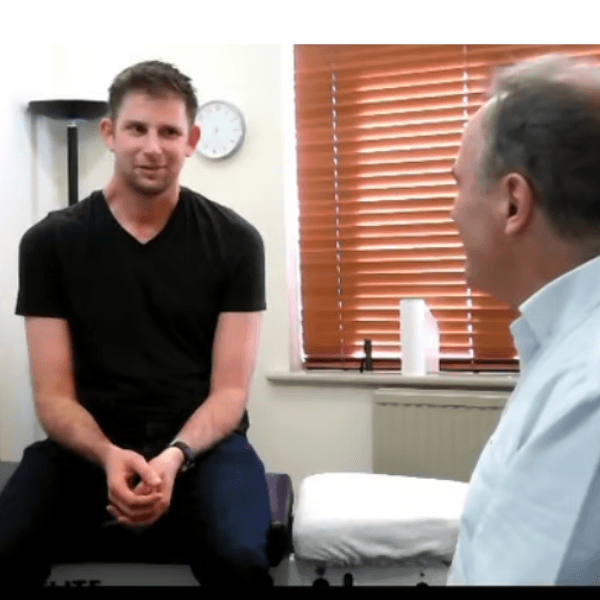
This young man was distressed by the uncontrollable shaking of his head and neck which made him look nervous even when he was not.
He never suspected the real culprit was a piece of dentistry he had as a teenager. This case illustrates how dental procedures can create lasting neurological interference.
This case presents a fascinating look at how a localized dental intervention can create a systemic malfunctioning afferent input loop. The patient, a young man, arrived with a diagnosis of torticollis—though clinically, it presented as significant involuntary movement—accompanied by a pronounced winging of the scapulae.
In the world of Afferentology, we don't just see a winging scapula as a weak muscle; we see it as an inhibited muscle. The question is always: What is the "nail in the foot" causing the brain to switch this muscle off?
The Neurological "Nail": The Apicectomy
I was able to diagnose the specific source of his nerve interference during his very first visit. The culprit was a previous apicectomy.
An apicectomy is a surgical procedure performed when an infection persists in the root of a tooth. Rather than a standard root canal, the tip of the root is surgically removed, and a retro-fill—often using mercury amalgam—is placed to seal the area. While the "hardware" goal is to stop infection, the sensory impact of the metal and the surgical scar can disrupt the 50Hz resting tone of the nervous system.
Clinical Follow-Up:
In the follow-up video (below), you can observe the dramatic shift in his motor control once this faulty afferent input was identified and neutralized. Who knew a dental procedure could have such profound effects on the stability of the neck and shoulders?
Conclusion: Look Beyond the Site of Pain
This case serves as a powerful reminder that traditional medicine often ignores the "software" impact of surgical scars and dental amalgams. If a patient is failing to heal, we must ask if their neurological data is being corrupted by a hidden irritant.