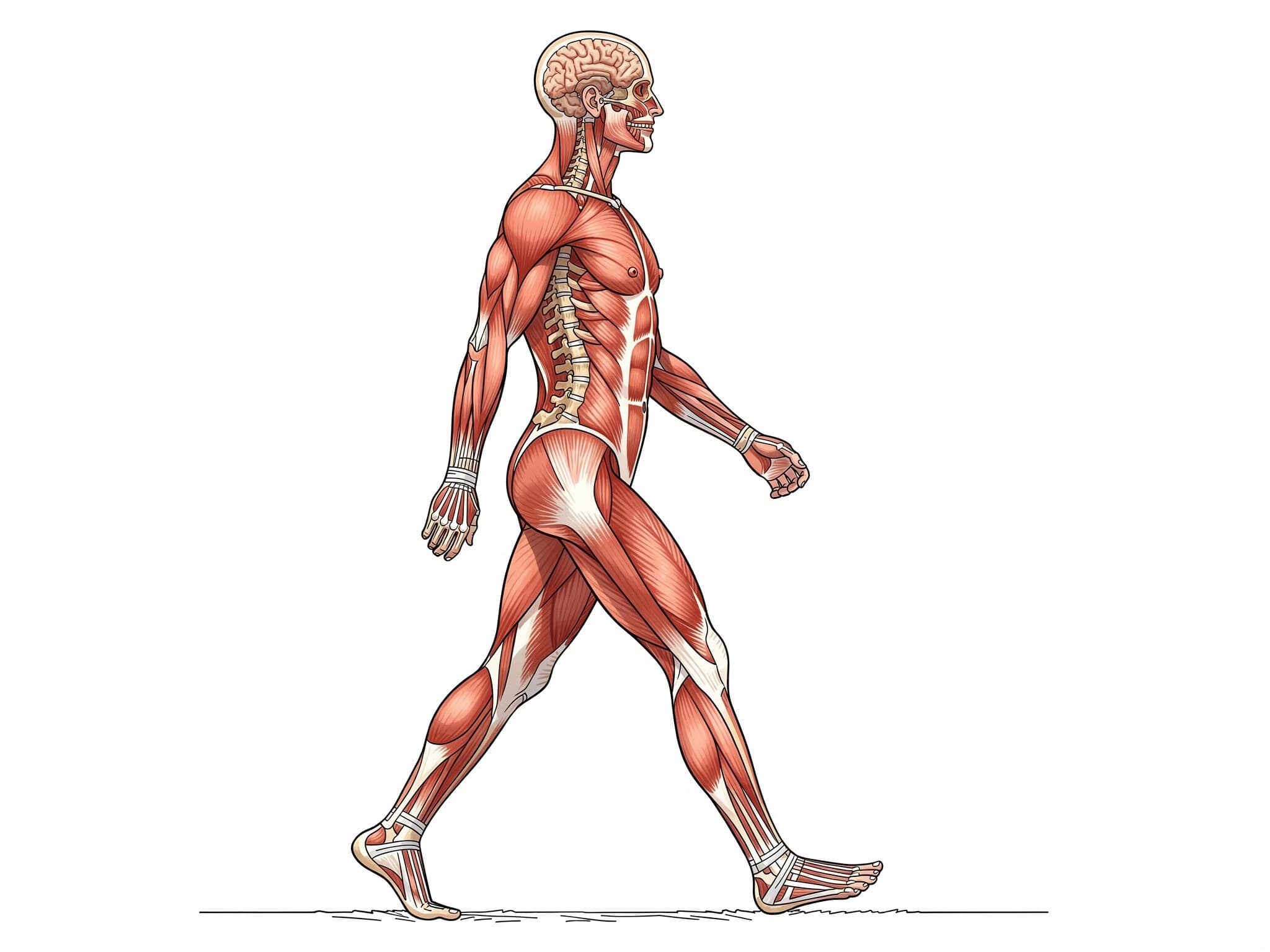
Epidemiological research has long confirmed that walking speed is one of the most accurate surrogate predictors of human mortality. But treating a slow gait by simply forcing yourself to walk faster is like painting over a "check engine" light—it confuses the symptom for the cause while ignoring the deep neurological breakdown occurring beneath the surface.
The Epidemiological Evidence: Walking Speed as a "Vital Sign"
In medical research, walking speed (gait speed) is widely regarded as a key indicator of functional health. Large-scale prospective studies—such as the landmark cohort analysis published in JAMDA (PMID: 22459909)—demonstrate that older adults in the slowest quartile of walking speed face a dramatically elevated risk of all-cause and cardiovascular mortality compared to their faster-walking peers.
Because locomotion requires the seamless integration of central nervous system processing, peripheral nerve conduction, cardiovascular output, and muscular force, epidemiologists frequently use gait speed as a single, convenient metric for biological age. When a person's gait slows to a shuffle, it serves as a powerful signal that the systemic engine is struggling.
However, this is where mainstream medicine and rehabilitation protocols make a critical conceptual error. Observing that fast walkers live longer, clinicians frequently advise patients to "practice walking faster" or engage in high-tempo treadmill training. This approach conflates a functional marker with the root driver of longevity.
The Fallacy of Treating the Marker: Why "Training Faster Walking" Fails
Walking speed is a downstream output, not an upstream cause. It is a biological read-out of how safely and efficiently your central nervous system can propel your body through space without falling.
If a person is walking slowly, it is almost never because they "forgot" how to move quickly or lack the conscious desire to move at a faster pace. Their gait is slow because their brain and nerve system has lost its capacity to process information quickly so that input and output are no longer seamless.
The Check Engine Light Analogy: Telling a patient with a slow gait speed to "just walk faster" is equivalent to taking a car with an overheating engine, knocking transmission, and misfiring pistons, and forcing it to run at 90 miles per hour on the highway. You haven't fixed the engine; you have simply accelerated its catastrophic mechanical breakdown.
Forcing an individual to walk faster than their nervous system feels safe operating will only trigger compensatory motor patterns, increase joint wear, and elevate the risk of falls. To understand why gait speed slows down in the first place, we must look at the motor neurons that govern movement.
The True Deciding Factor: Neurological Inhibition and the Withdrawal Reflex
Every motor neuron in the spinal cord acts as a central integrative hub, receiving up to 10,000 individual facilitatory and inhibitory inputs. Even at rest, a motor neuron maintains a continuous, automated baseline output (around 5Hz) to keep muscles active and joints safe. When a dynamic challenge arises, that output can rapidly scale up to 50Hz to deliver instant power and dynamic stabilisation.
However, when CNS neurons have their messaging systems compromised, motor neurons cannot be controlled automatically and movements have to be more considered. The patient is forced to rely on sight and vestibular clues, slowing down their progress.
The Software vs. Hardware Distinction: A slow gait speed is not a primary "hardware" failure of the leg muscles or joints. It is a "software" failure. Another study found that slow walking speed and reduced grip strength was related to the number of natural teeth remaining rather than muscle mass. This is likely because each tooth provides important afferent input and therefore brain stimulation.
Clinical Takeaways for Restoring the Engine, Not Just the Speedometer
- Gait speed is a symptom, not the driver: Slow walking speed correlates with higher mortality because it reflects widespread, systemic neurological and physical stress—not because the speed itself is protective.
- Never force speed over signal: Training a patient to walk faster without addressing underlying muscle inhibition forces the body into destructive compensation patterns.
- Audit muscle control in real-time: Utilising Protective Reflex Testing allows clinicians to identify which motor units are inhibited and restore their 50Hz baseline tone, allowing the brain to naturally and safely increase walking speed on its own.
You do not gain health by forcing a slow body to walk fast. You gain speed when the nervous system finally feels safe enough to go fast.
By moving past simple surrogate markers and addressing the underlying neurological software, clinicians can eliminate the interference holding their patients back—restoring true functional capacity, joint protection, and long-term vitality.