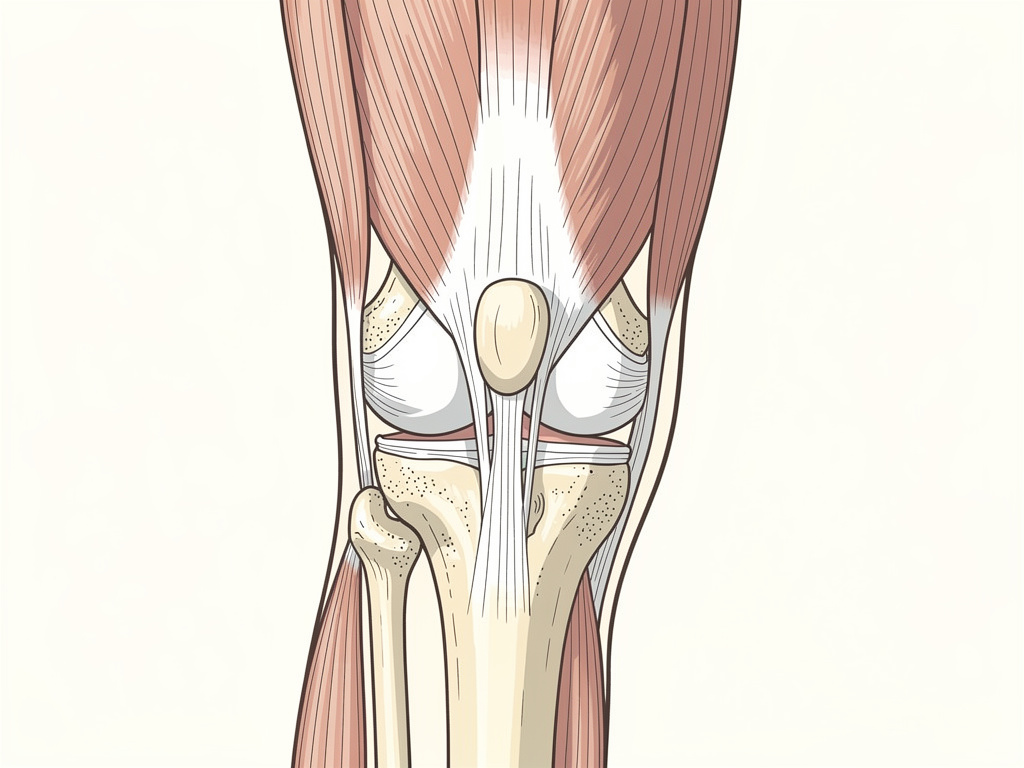
The Knee Exercise That Cannot Work Until You Fix the Programming
Mark is a 41-year-old dog trainer. He spends his working day squatting, kneeling, pivoting and jogging backwards across wet fields with his eyes on a spaniel rather than on the ground. Eighteen months ago he landed heavily in a Sunday league football match. There was no tackle and no twist, just a bad landing.
The injury was managed conservatively and, by every orthopaedic measure, it settled. What didn't resolve was a deep ache at the front of the knee. Stairs were the worst. Then long drives between clients. His physiotherapist found the classic kneecap drifting outwards as the knee bent, and prescribed the classic answer: strengthen the quadriceps.
Eight weeks of diligent quadriceps work later, and he still couldn't kneel next to a dog without wincing.
Patellar Maltracking Is a Reflex Problem First
The conventional story treats the quadriceps as a weak muscle that needs strengthening, and strengthening means exercising.
Afferentology says that exercise is only effective when the muscle is strong, or not inhibited. Neurological competence comes first, then the exercise can be effective.
Getting these the wrong way round is like racing a car that's only running on 3 out of 4 cylinders. It will manage the task but probably create many more problems than if the system had been working properly.
Mark's quadriceps wasn't weak, it was inhibited. Its motor neuron supply had been partially subdued by inadequate facilitation.
This matters because the quadriceps is essential to keep the patella stable and the relationship between the femur and tibia consistent. Its resting muscle tone, the continuous background firing every healthy muscle maintains, is what balances the opposite pulls of the hamstrings and quadriceps. Turn that tone down and the kneecap drifts with every step. Cartilage on the facet takes an uneven load, and injury follows.
What Was Inhibiting Mark's Quadriceps? Finding the Afferent Source
A failed reflex has a cause: an afferent signal sabotaging the nervous system. In patellofemoral patients the usual suspects are:
- The lumbar spine. L3-L4 is the femoral nerve's origin. Afferent disturbance there inhibits the quadriceps generally and the quadriceps preferentially. In a patient with anterior knee pain and no knee injury at all, look here first.
- An old injury that "healed." This was Mark. A damaged ACL is a torrent of joint afferent input, and the protective inhibition it triggers does not automatically switch off when the ligament settles. The nervous system had inhibited the quadriceps eighteen months ago to protect an injured knee, and although it healed, it never came back to fully normal.
Protective Reflex Testing: Testing the Circuit, Not the Muscle
Protective Reflex Testing (PRT) tested Mark's quadriceps specifically with the knee locked in slight flexion. It gave way immediately.
Then the detective work. Using techniques we teach in Afferentology, we can challenge and change proprioception and afferentation systematically until the strength returns. The knee joint challenge changed nothing. The lumbar challenge found the issue.
Adjusting L2, in the direction and position that returned the strength, as shown by the tests, restored the strength.
A week later Mark was back kneeling in wet fields and playing football again. The exercise programme finally did its job — once the software was restored.
Clinical Takeaways
- Quadriceps inhibition is the signature finding in stubborn patellofemoral pain. If weeks of well-executed quadriceps exercise have produced little change, the working assumption should be inhibition, not non-compliance.
- Exercise before PRT is premature. The evidence for quadriceps exercise is sound. The sequencing is wrong. Confirm the normal motor neuron supply first.
- No knee trauma? Check L2-L3-L4. The femoral nerve's spinal origin is a primary candidate when the knee itself is quiet.
The Quadriceps Is Not Weak. It Is Sabotaged.
Find what messed up the input to fix the output. Remove it. Retest. Then prescribe the exercises. In that order, the programme works. In the conventional order, no amount of exercise will fix the problem.
To your strength!