The Myotatic Reflex is the body's primary defense against structural collapse. While traditional therapy focuses on muscle bulk, Afferentology focuses on the speed and integrity of this vital neurological circuit.
The Myotatic Reflex (or stretch reflex) is likely our body's most important and unrecognized defense mechanism. When it comes to navigating the physical world safely, nothing is more critical to joint stability and injury prevention.
The Mechanics of the Resting Tone Signal
Muscles constantly monitor their own length and tension via the muscle spindle. These spindles spontaneously produce afferent impulses—the resting tone—sent directly to the spinal cord. Without this constant "hum" of data, controlled movement would be impossible.
"Any sudden change in tension or stretch increases this feedback. If the software is clear, the spinal cord produces an instantaneous increase in muscle tone to protect the joint."
The Reflex Pathway: The Body's Software Loop
When a muscle is stretched, the spindle is activated, sending a signal through afferent sensory neurons to the spinal cord. The cord then sends a return signal through motor neurons, causing the muscle to contract. This loop resists the stretch and maintains the cortical drive necessary for movement.
This reflex doesn't work in isolation. It coordinates with the opposing muscle group (the antagonist) to create balance. By limiting excessive stretch, it protects ligaments and joints from the sprains, tears, and dislocations that occur when the hardware is left undefended.
The Walking Paradox: Eccentric Control
Consider walking down stairs. As you step down, your quadriceps must lengthen under load—an eccentric contraction. As the muscle stretches, the myotatic reflex triggers a proportional contraction to control your descent. If this reflex is delayed by even a millisecond due to a Withdrawal Reflex elsewhere in the body, the knee joint takes the full force of the impact.
The Knee-Jerk Phenomenon
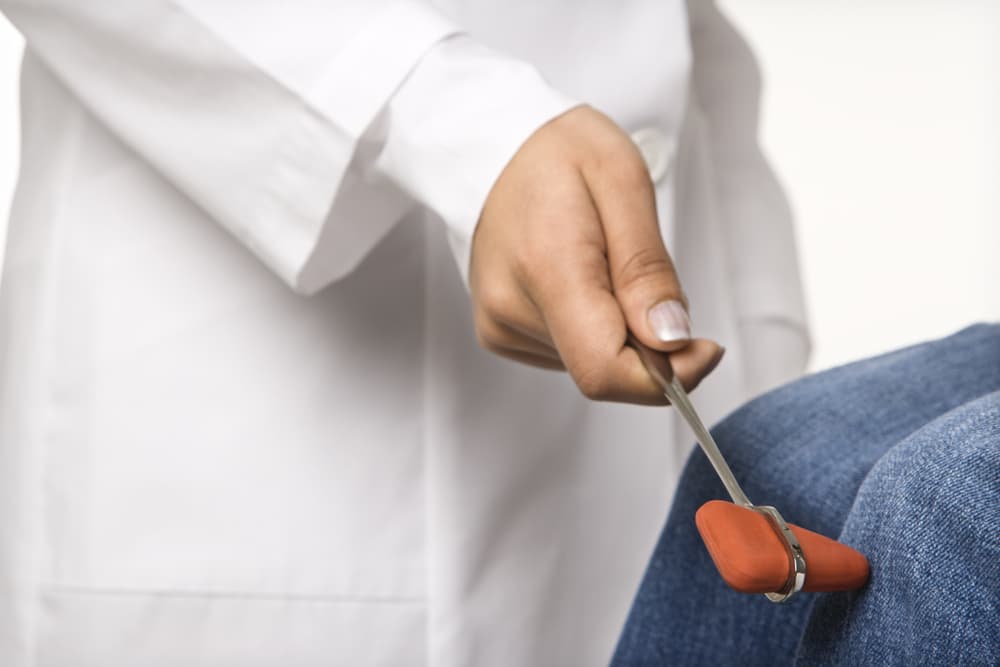
The famous "knee-jerk" test is a clinical audit of the myotatic reflex. A sudden tap on the tendon induces a quick firing at the anterior motor neuron. In Afferentology, we don't just look for the presence of the jerk; we look for the quality and symmetry of the neurological response.
Joint Damage and the "Silent" Inhibition
The myotatic reflex is the primary guardian of your joints. When it is working properly, joints are shielded from excessive movement. However, when the system is plagued by "software glitches"—abnormal afferent inputs—the reflex becomes inhibited.
Inhibition of the myotatic reflex is the hidden precursor to osteoarthritis. When the muscle cannot protect the joint, the "hardware" (cartilage and bone) begins to degrade.
The Clinical Goal of Afferentology
The ultimate aim of Afferentology is the elimination of abnormal inhibition within the myotatic reflex. By removing the "Nail in the Foot" and neutralizing aberrant afferent signals, we restore the full nerve supply to the muscles.
Only when the reflex loop is fully operational can the body provide the support and feedback required for true repair and long-term healing.
Learn to Work With the Myotatic Reflex
Discover techniques to assess and restore proper myotatic reflex function in your patients.