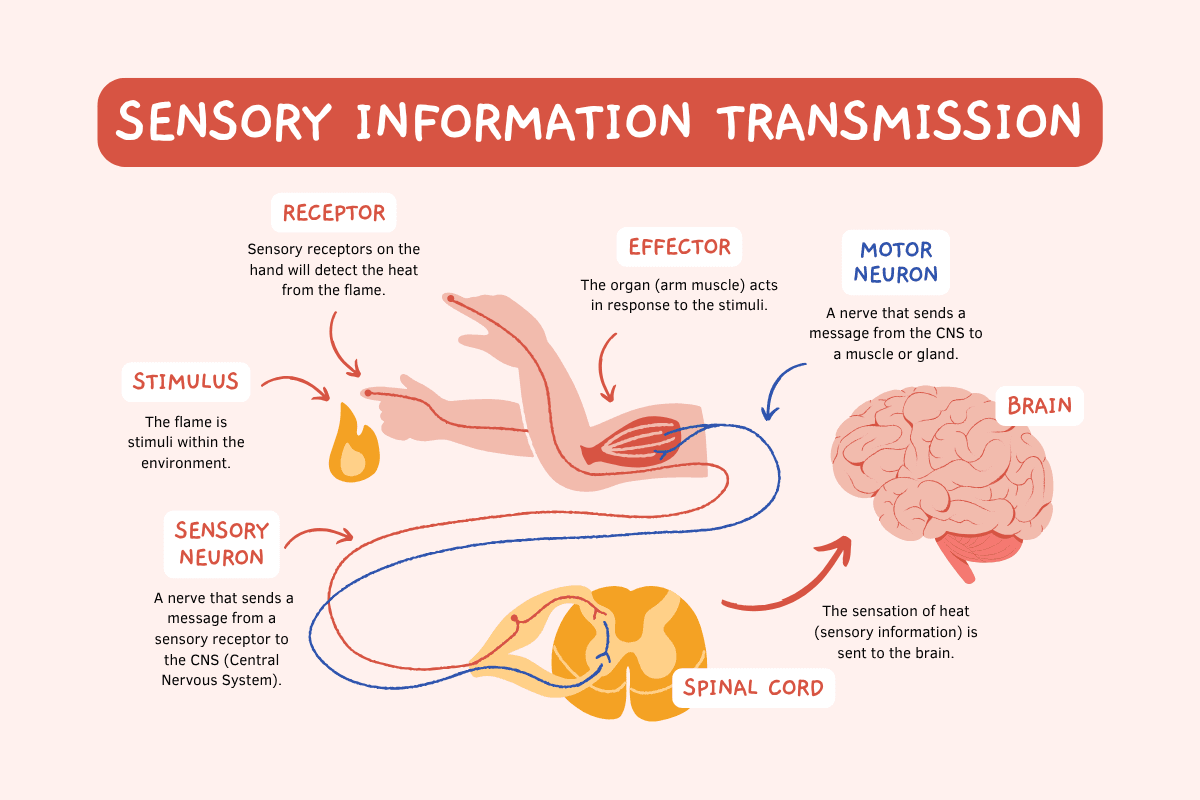
Your conscious thought is actually quite slow. Imagine a glass sliding off the edge of a table; you don't rationally calculate its trajectory or the force required to intercept it. You simply react. This lightning-fast protection is managed entirely by your reflexes—specifically the myotatic reflex (the stretch reflex). While often overlooked in traditional clinics, this reflex is the master regulator of your muscle tone and strength.
In the field of Afferentology, we understand that pain is rarely a "hardware" issue involving just bones and muscles. Instead, pain is a neurological output. To restore optimal function, a practitioner must look past the symptom and evaluate the data stream entering the brain.
The Human Bio-Computer: Input vs. Output
The musculoskeletal system is our primary sensory organ. It sends a constant stream of afferent input to the spinal cord and brain regarding muscle length, tension, and position. This is the body’s "50Hz resting tone"—a background frequency of neurological data that allows for instant stability.
When this feedback loop is pristine, you possess functional resilience. You can lift, run, and absorb unexpected impacts without injury. However, when the data becomes corrupted—due to old scars, dental imbalances, or hidden irritants—the brain interprets a threat. Like a biological circuit breaker, the nervous system responds with neurological inhibition, keeping certain muscles "off-line" to protect the system. This creates a state of weakness that no amount of conscious "core strengthening" can fix.
The Case of Sarah: Why "Strengthening" Isn't Always the Answer
Consider Sarah, a 45-year-old athlete struggling with chronic, non-specific lower back pain. Despite being active in tennis and running, her pain flares up during every serve.
The Traditional Biomechanical View
Sarah’s previous practitioners focused on the "hardware." They identified tight hamstrings and a "weak core." She was prescribed adjustments and repetitive strengthening exercises (efferent output). While she felt temporary relief, the pain inevitably returned. Her care was focused on the implications of the problem, rather than the neurological malfunction driving it.
The Afferentology Perspective
An Afferentologist views Sarah’s body through a neurological lens. Using Protective Reflex Testing, they assess the speed and reliability of her myotatic reflex. They discover that her right psoas (a critical core stabilizer) is neurologically inhibited. It isn't "weak" because of lack of exercise; it is being intentionally dampened by the brain.
"Standard protocols fail because they treat diagnoses, not individuals. Afferentology treats the source of the signal."
The culprit? A "nail in the foot" analogy. Just as a nail in your shoe would cause you to limp and inhibit your leg muscles, Sarah had a hidden afferent irritant—an old, poorly healed ankle sprain—that was sending "threat" signals to her brain. Because the psoas was inhibited, other muscles had to overcompensate, leading to the chronic strain and spinal "fixations" she felt in her back.
The Solution: Restoring the Signal
By identifying the specific aberrant sensory input and providing a targeted neurological correction, the Afferentologist resets the system. Instantly, Sarah’s psoas reflex is restored. She doesn't just feel "better"—she feels stable. Her inhibited muscles fire at full strength because the "circuit breaker" has been reset.
An Afferentology check is vital because it reveals the hidden neurological errors that keep us in a cycle of pain. When we restore the correct afferent input, we remove the need for protective inhibition, allowing the body to finally achieve genuine, lasting health.